


Introduction
In today’s fast-paced digital world, marketing success depends on how effectively you use the right tools. From managing social media campaigns to tracking website performance, digital marketing tools empower marketers to save time, optimize strategies, and achieve better results. But with so many tools available, it can be overwhelming to choose the best ones.
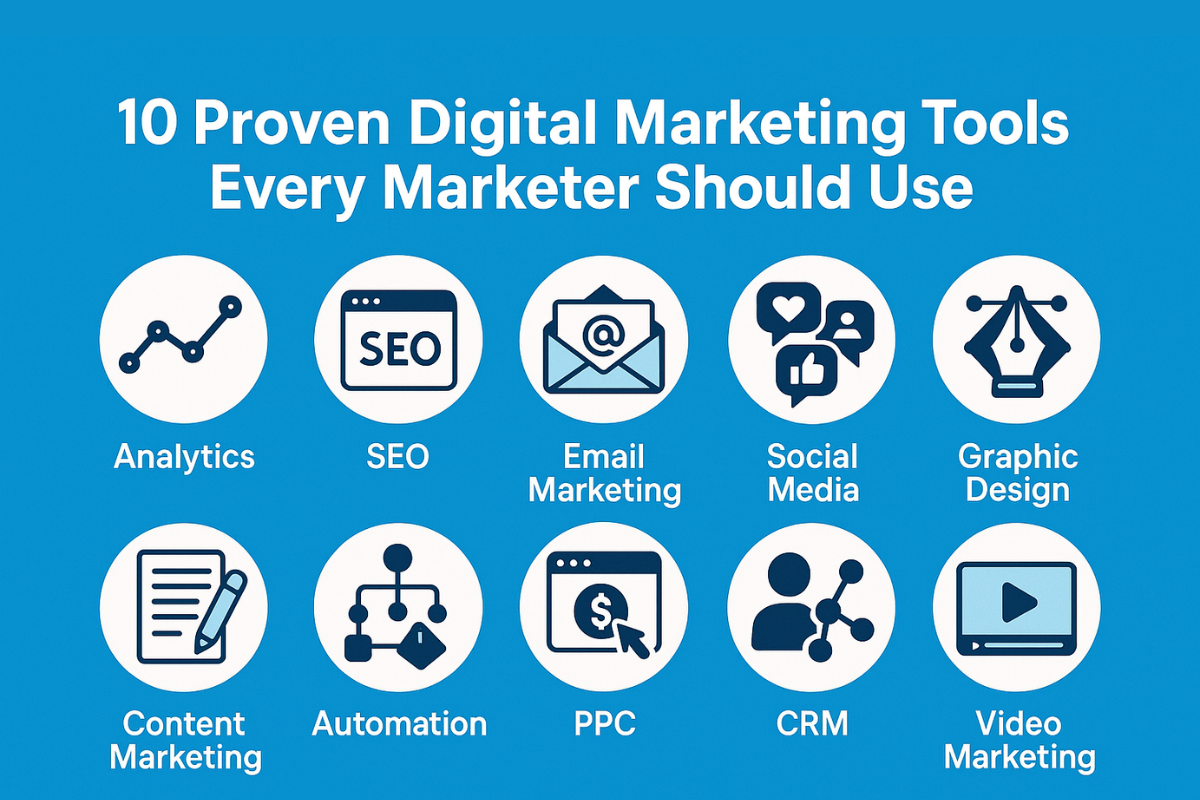
That’s why we’ve compiled a list of 10 proven digital marketing tools every marketer should use. These tools are trusted by professionals worldwide to streamline workflows, boost ROI, and improve customer engagement.
Quick Overview: Top 10 Digital Marketing Tools
Here’s a basic information table highlighting each tool, its primary function, and why it’s useful.
| Tool Name | Primary Function | Why Marketers Use It |
|---|---|---|
| Google Analytics | Website traffic analysis | Tracks visitor behavior, conversions, and campaign performance. |
| SEMrush | SEO & keyword research | Provides keyword data, competitor analysis, and site audits. |
| Ahrefs | Backlink & SEO analysis | Helps track backlinks, keyword rankings, and competitor strategies. |
| HubSpot | CRM & inbound marketing | Manages leads, automates campaigns, and improves customer relationships. |
| Mailchimp | Email marketing automation | Simplifies email campaigns, templates, and audience segmentation. |
| Hootsuite | Social media management | Schedules posts, tracks engagement, and manages multiple accounts. |
| Canva | Graphic design tool | Creates eye-catching social media graphics, ads, and marketing content. |
| Google Ads | Paid advertising platform | Runs PPC campaigns with precise targeting and measurable ROI. |
| BuzzSumo | Content research & influencer marketing | Identifies trending topics, content ideas, and influencer partnerships. |
| Trello | Project & task management | Organizes marketing workflows, collaboration, and productivity. |
Detailed Breakdown of the Tools
1. Google Analytics
Google Analytics is a must-have for tracking website traffic, user behavior, and conversions. With insights into bounce rates, demographics, and traffic sources, marketers can refine strategies and make data-driven decisions.
Key Benefits:
- Free and easy to integrate.
- Monitors campaign effectiveness.
- Offers deep audience insights.
2. SEMrush
SEMrush is an all-in-one SEO tool that helps marketers discover profitable keywords, analyze competitors, and run site audits. It’s particularly powerful for those focusing on search engine optimization and PPC campaigns.
Key Benefits:
- In-depth keyword research.
- Tracks rankings and SERP performance.
- Competitive analysis for better strategies.
3. Ahrefs
Ahrefs is one of the most popular SEO tools for backlink analysis and keyword tracking. It provides detailed competitor insights, helping marketers uncover link-building opportunities.
Key Benefits:
- Robust backlink database.
- Competitor keyword research.
- Site audits for SEO health.
4. HubSpot
HubSpot is more than a CRM—it’s a complete inbound marketing solution. From email automation to lead management, it helps marketers nurture customers through every stage of the buyer’s journey.
Key Benefits:
- Centralized CRM system.
- Automates workflows and campaigns.
- Strong lead tracking features.
5. Mailchimp
Mailchimp simplifies email marketing with automation, drag-and-drop templates, and audience segmentation. It’s perfect for startups and businesses that want to stay connected with customers.
Key Benefits:
- User-friendly platform.
- Great for small to medium businesses.
- Detailed performance analytics.
6. Hootsuite
Hootsuite helps marketers manage multiple social media platforms from one dashboard. Scheduling posts and monitoring brand mentions becomes effortless, saving time while boosting engagement.
Key Benefits:
- Manages multiple accounts.
- Tracks audience interactions.
- Provides analytics reports.
7. Canva
Visual content is crucial in digital marketing, and Canva makes it simple to design professional graphics. From social media posts to infographics and presentations, Canva is a go-to tool for non-designers.
Key Benefits:
- Drag-and-drop interface.
- Thousands of templates.
- Collaboration-friendly.
8. Google Ads
For businesses investing in paid advertising, Google Ads offers targeted PPC campaigns. With measurable ROI and advanced targeting options, it’s one of the most effective ways to drive traffic and conversions.
Key Benefits:
- Advanced targeting options.
- Highly measurable results.
- Suitable for any business size.
9. BuzzSumo
BuzzSumo helps marketers find trending content ideas and identify influencers in their industry. By analyzing what works best, you can optimize your content strategy and boost engagement.
Key Benefits:
- Identifies viral content.
- Discovers influencers for partnerships.
- Tracks competitor performance.
10. Trello
Trello is a simple yet powerful project management tool that organizes tasks into boards and lists. Marketers use it to plan campaigns, assign tasks, and collaborate seamlessly.
Key Benefits:
- Intuitive drag-and-drop system.
- Great for team collaboration.
- Visual workflow management.
Why These Tools Matter for Marketers
Digital marketing is no longer about guesswork. These tools provide measurable data, streamline operations, and help businesses stay competitive. By leveraging the right mix of SEO, content, social media, and project management tools, marketers can maximize productivity and ROI.
Conclusion
The world of digital marketing is constantly evolving, but the tools above remain essential for success. Whether you’re a beginner or a seasoned marketer, adopting these 10 proven digital marketing tools will empower you to plan better campaigns, engage audiences effectively, and grow your business in a competitive landscape.
Start small, test each tool, and integrate them into your workflow. The right toolkit can make all the difference in your digital marketing journey.
