


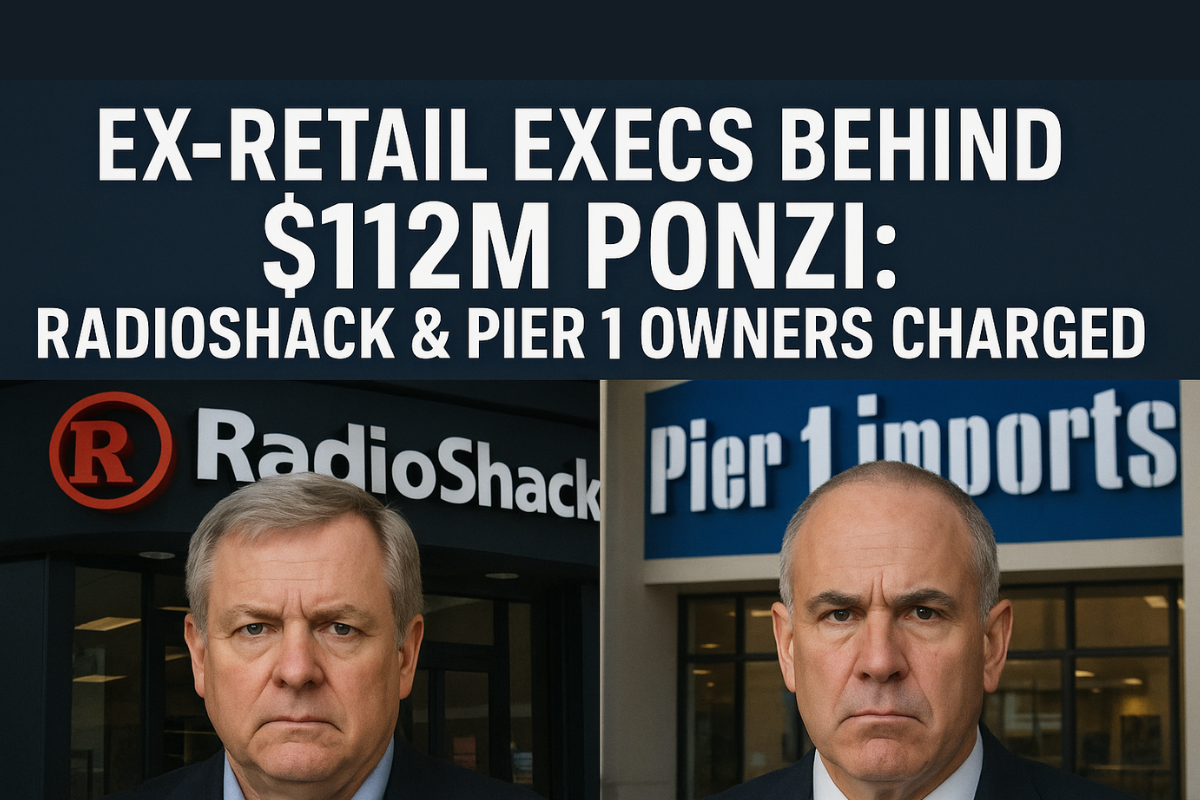
In a shocking development for the retail and investment world, former retail executives Alex Mehr and Tai Lopez, along with Retail Ecommerce Ventures’ (REV) Chief Operating Officer Maya Burkenroad, have been charged by the U.S. Securities and Exchange Commission (SEC) for allegedly running a $112 million Ponzi scheme. According to a complaint filed in the U.S. District Court for the Southern District of Florida on Tuesday, the co-founders of Miami-based Retail Ecommerce Ventures misled hundreds of U.S. investors while raising funds for struggling retail brands they controlled.
The allegations have raised serious concerns about investment practices in the world of retail e-commerce, especially when notable names like RadioShack and Pier 1 are involved. This blog delves into the details of the complaint, the alleged investment schemes, and how these former retail executives allegedly misappropriated millions of dollars.
The Allegations: A Breakdown of the SEC Complaint
The complaint against Mehr, Lopez, and Burkenroad outlines a series of deceptive practices between April 2020 and November 2022. During this period, the executives reportedly raised around $112 million from hundreds of U.S. investors through two types of investment offerings:
- Unsecured Notes: These promised returns of up to 25% annually.
- Ownership Shares: These offered monthly payouts as high as 2%.
Investors were led to believe that the money would be used to acquire struggling retail brands and fund their operations. However, the SEC alleges that the executives misrepresented the actual performance of the businesses under REV’s control.
Key Misrepresentations
- Promotional videos, publicly available online, showcased Tai Lopez claiming REV’s approach as “one of the best strategies you can invest in.”
- Mehr and Lopez assured investors that their portfolio companies were thriving while other businesses were struggling. They repeatedly stated that cash flow was strong.
- Investors were told that funds raised for a specific portfolio company would be allocated exclusively to that company.
While some of REV’s brands generated revenue, none reportedly produced actual profits.
Basic Information Table
| Parameter | Details |
|---|---|
| Company | Retail Ecommerce Ventures (REV) |
| Co-founders | Alex Mehr, Tai Lopez |
| COO | Maya Burkenroad |
| Total Funds Raised | ~$112 million |
| Investment Types | Unsecured notes (up to 25% annual return), ownership shares (monthly payouts up to 2%) |
| Timeframe | April 2020 – November 2022 |
| Alleged Misconduct | Misleading investors, misappropriating funds, Ponzi-like payments |
| Brands Involved | Dress Barn, Linen ‘N Things, Modell’s, Pier 1, RadioShack |
| Misappropriated Funds | ~$16.1 million for personal use |
| Ponzi-like Payments | ~$5.9 million funded by other investors |
| Outcome | Creditors took the brands and sold them to Omni Retail Enterprises, LLC |
How the Alleged Scheme Worked
According to the SEC, the executives used the raised funds in a manner consistent with a Ponzi scheme. To meet the promised returns for investors, they reportedly relied on:
- Loans from outside lenders
- Merchant cash advances
- Funds raised from new and existing investors
- Transfers from one portfolio company to another
This practice resulted in at least $5.9 million of investor returns being “Ponzi-like payments funded by other investors.” Meanwhile, Mehr and Lopez allegedly misappropriated around $16.1 million for personal use.
The SEC’s complaint paints a troubling picture of how the executives prioritized appearances of financial success over transparency and accountability to investors. Despite public claims of profitability and strong cash flow, none of the brands under REV produced actual profits.
The Retail Brands in Question
Retail Ecommerce Ventures acquired several well-known retail brands, attempting to revive them in the e-commerce era. However, the SEC complaint indicates that the companies struggled financially and were used as vehicles to attract investment rather than generate genuine returns.
Some of the brands involved include:
- RadioShack: Once a tech retail giant, revived under REV for online and limited physical operations.
- Pier 1 Imports: The furniture and home décor chain had filed for bankruptcy before being acquired by REV.
- Dress Barn: A clothing retailer that also struggled financially post-acquisition.
- Linen ‘N Things: Home goods and bedding retailer.
- Modell’s Sporting Goods: The iconic sports retailer that faced bankruptcy.
REV raised funds by presenting these acquisitions as opportunities for profitable turnaround investments, but the SEC claims that none of these brands turned a profit while under REV’s management.
The Impact on Investors
Hundreds of investors across the U.S. contributed funds to REV’s ventures, lured by promises of high returns and secure investment opportunities. Many were likely drawn by the reputations of Lopez and Mehr in the business world and the nostalgic appeal of the acquired retail brands.
However, the SEC alleges that the executives used a mix of financial sleights and manipulations to pay early investors, creating the illusion of success while diverting significant funds for personal use.
Legal Implications and Charges
The SEC’s complaint in the Southern District of Florida seeks to hold Mehr, Lopez, and Burkenroad accountable for their alleged actions. If found guilty, they could face serious civil and potentially criminal penalties. The charges highlight the growing scrutiny on investment practices in the e-commerce sector and the risks posed to retail investors when high-profile executives overpromise and underdeliver.
Lessons for Investors
This case serves as a cautionary tale for anyone considering investments in e-commerce or struggling retail brands. Key takeaways include:
- High Returns Often Come with High Risk: Promises of 25% annual returns or consistent monthly payouts should be met with skepticism.
- Verify Fund Allocation: Investors should ensure that funds raised are actually used for the stated purpose.
- Scrutinize Claims of Profitability: Revenue does not equal profit; due diligence is critical.
- Look Beyond Reputation: While a recognizable name can lend credibility, it does not guarantee ethical business practices or successful investment outcomes.
The Aftermath for Retail Brands
Following the alleged default and mismanagement, creditors seized the brands and sold them to a new entity, Omni Retail Enterprises, LLC. This move aims to continue operations under new ownership while distancing from the alleged misconduct associated with REV.
The transition highlights the challenges faced by legacy retail brands in the digital era and the importance of effective management, transparency, and sound financial planning.
Conclusion
The SEC’s allegations against Alex Mehr, Tai Lopez, and Maya Burkenroad shine a light on the dark side of high-profile retail acquisitions and investment schemes. Raising $112 million from investors while misrepresenting profitability, misappropriating funds, and using Ponzi-like tactics underscores the necessity for investors to exercise extreme caution.
While the involved retail brands continue under new ownership, the case serves as a reminder of the risks associated with investing in struggling businesses—even when run by executives with seemingly impressive resumes.
Investors and stakeholders in the e-commerce and retail space should take heed of this case, ensuring that future investments are backed by transparent operations, verified financial statements, and responsible management.
